
 Low Online Discount Prices
 Fast Delivery
 Safe and Secure Online Checkout
Few things are more frustrating than stepping into the bathroom expecting a powerful wash, only to be met with a weak trickle. If you are dealing with low shower pressure, it can make your morning routine feel difficult rather than a refreshing start to the day.
Water pressure dictates how fast water flows through your pipes and out of your showerhead. When this pressure drops, your entire washing experience suffers. Understanding the root cause of this problem is the first step to restoring a strong, steady water flow to your bathroom.
This guide from Showers to You explains the common causes of low shower pressure, shows you how to test your home’s water flow accurately, and provides actionable steps to solve the problem for good.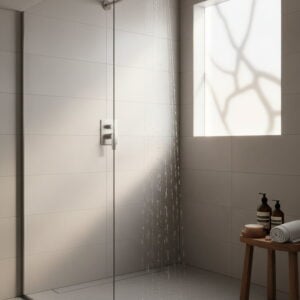
Understanding water pressure
Water pressure is measured in “bars”. One bar of force is the pressure required to push water to a height of 10 metres. By law, UK water companies must provide a statutory minimum pressure of 1.0 bar (or 10 metres head) at the point where the communication pipe enters your property boundary.
If you want to know how your bathroom performs, you can test your flow rate with a simple litres-per-minute test. Grab a one-litre or two-litre measuring jug and a stopwatch. Place the jug under the shower, turn the water on full blast, and time exactly six seconds before turning it off.
Take the amount of water in the jug (in litres) and multiply it by 10. This resulting figure is your property’s flow rate in litres per minute. If this flow rate is less than 10 litres per minute, you officially have low shower pressure and should look into making improvements. For more information, check out our Complete Guide to Understanding Water Pressure.
Common causes of low shower pressure
Identifying the cause of weak water flow saves you time and money. Here are the most frequent culprits found in UK homes.
Blocked showerhead
Limescale and hard water sediment naturally build up inside plumbing fixtures over time. These mineral deposits block the small rubber nozzles on your showerhead, severely restricting the amount of water that can pass through.
Kinked or damaged shower hose
A damaged or bent hose stops water from reaching the showerhead efficiently. If your hose is old, replacing it is a quick and highly effective fix. The Roper Rhodes 1500mm Low-Pressure Shower Hose is an excellent replacement choice. It features an easy-clean PVC coating, a stunning chrome finish, and is designed specifically for low-pressure systems. Backed by a 2-year manufacturer’s warranty and rated 4.7 out of 5 stars on Trustpilot, it brings immediate reliability to your daily routine. Browse and shop today to replace your worn-out hose.
Issues with water isolators
Your home has a main shut-off valve, usually located under the kitchen sink. If you have recently moved or had plumbing work done, this valve might be partially closed. A partially closed valve restricts the main water supply, resulting in low shower pressure throughout the house.
The type of water system in your home
Your home’s heating and water storage system heavily influences your baseline water pressure.
- Gravity-Fed Systems: Often found in older properties, these systems feature a cold-water tank in the loft and a hot-water cylinder in an airing cupboard. Because they rely on gravity, the pressure is determined by the height difference between the cold-water tank and the showerhead. Lower height means lower pressure.
- Combi Boiler Systems: These wall-mounted boilers take water directly from the mains and heat it on demand, removing the need for storage tanks. They usually provide high pressure, but they rely entirely on the mains supply.
- Unvented Systems: These feature a hot water tank but no cold water storage. They operate at mains pressure, typically delivering a very strong flow.
Low mains water pressure
Sometimes the issue originates from the supplier. High neighbourhood demand during peak morning hours can cause a temporary pressure drop. Leaks in the local municipal water network will also reduce the flow before it even reaches your property.
Boiler or water heater problems
If your cold water flows rapidly but your hot water is a slow trickle, your boiler or hot water cylinder may be faulty. Internal blockages or failing valves within the heating unit can severely limit hot water delivery.
Troubleshooting and solutions for low shower pressure
Once you know what is causing the drop in flow, you can take steps to correct it.
Simple DIY fixes
Start with the easiest solutions. Clean your showerhead thoroughly to remove limescale blockages. Our dedicated blog post, “How to Clean a Showerhead,” explains further. You can do this by detaching the head and soaking it in a descaling solution or white vinegar for a few hours.
Next, inspect your shower hose. Straighten out any kinks and check for internal collapses. Finally, locate your main water shut-off valve and ensure it is fully open.
When to consider upgrades or professional help
If cleaning and checking valves do not fix your low shower pressure, you may need to upgrade your hardware.
Invest in a low-pressure mixer shower.
Older mixer valves often struggle to process water efficiently. Upgrading to a model designed specifically to handle gravity-fed systems makes a massive difference. The Ajax Croxby Low-Pressure Chrome Thermostatic Bar Mixer Shower delivers exceptional performance at a minimum operating pressure of just 0.2 Bar. It features a solid brass construction, a beautiful rounded design, and eliminates sudden temperature spikes. 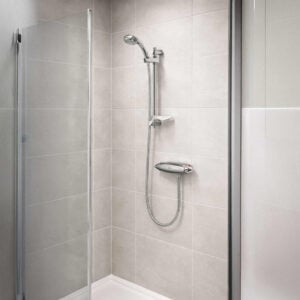
Upgrade to an exposed valve kit.
If you want an all-in-one hardware upgrade, the Aqualisa Aquarian Exposed Valve complete with an Aqualisa Chrome Turbo Spray Shower Head & Slide Rail Kit requires a minimum operating pressure of just 0.1 bar. This surface-mounted unit offers fuss-free fitting and reliable thermostatic control. Customers highly recommend it, with John S stating, “Simply the best. You can buy with confidence,” while Jane M noted it is “Easy to install and a great looking shower.” David w also gave it a 5-star rating, mentioning it “looks great” and praising the fast delivery.
Consider a smart digital shower.
Technology has introduced brilliant solutions for gravity-fed homes. The Mira Platinum Rear Fed Dual Outlet Low Pressure Digital Shower is a sophisticated, smart home-compatible system designed specifically to tackle low pressure. It features voice activation, a rechargeable wireless control hub, and the Mira 360 Showerhead with four distinct spray patterns. 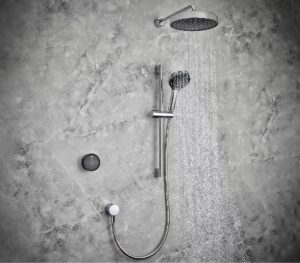
Fit a shower pump
If you have a gravity-fed system, fitting a pump is one of the most effective ways to cure low shower pressure. A pump actively forces water through the pipes, vastly increasing the flow rate. The Bristan 1.5 Bar Twin-Ended Shower Pump Powered By Stuart Turner is designed to boost two water supplies to the equivalent of 10 metres head pressure, delivering up to 32 litres of water per minute. It operates with low running noise and features anti-vibration feet. Customer Stephen C awarded it 5 out of 5 stars, stating, “Replacement pump replaced my old one.”
Frequently Asked Questions (FAQ)
How do I fix low water pressure in my shower?
Start by cleaning your showerhead to remove limescale and checking your hose for kinks. Ensure the main water valve in your home is fully open. If these steps fail, you may need to install a shower pump or upgrade to a low-pressure thermostatic mixer valve.
Why is there no water pressure in my shower but plenty everywhere else?
If your bathroom sink taps run perfectly but the shower trickles, the problem is localised. This usually points to a severely clogged showerhead, a collapsed shower hose, or a blocked filter cartridge in the shower valve.
How can I make my shower more powerful?
To drastically increase power on a gravity-fed system, install a twin-ended shower pump. Alternatively, you can replace your current setup with a dedicated power shower that houses an electrically driven pump directly inside the unit.
How do I get the pressure back in my shower?
Routine maintenance is key. Descalcify your showerhead every few months, replace old, stiff hoses, and ensure your plumbing system is free of airlocks. If your boiler is ageing, having a professional plumber service your hot water cylinder can also restore lost pressure.
Getting your shower back up to speed
Dealing with low shower pressure is an inconvenience, but it is rarely a permanent problem. By understanding your home’s water system, keeping your hardware clean, and investing in the right low-pressure accessories, you can easily restore a strong and steady flow to your bathroom. Check your equipment, measure your flow rate, and take action to build the reliable bathroom setup you deserve.