
 Low Online Discount Prices
 Fast Delivery
 Safe and Secure Online Checkout
To fit an extractor fan, determine the best ceiling or wall location and turn off the mains electrics. Cut the required opening, install the external ducting, and physically mount the fan unit. Always hire a qualified electrician to complete electrical connections in compliance with UK Part P regulations.
Bathrooms generate high levels of moisture. Without proper ventilation, this moisture quickly turns into condensation, leading to stubborn mould and damp patches on your walls. Installing an extractor fan is a highly effective way to protect your bathroom decor and maintain excellent indoor air quality.
This comprehensive guide from Showers to You explains exactly how to fit an extractor fan correctly. You will learn about the different fan types available, the specific tools required, and the exact steps needed to complete the installation safely.
By understanding these steps and adhering to UK electrical safety laws, you can keep your room fresh and free from moisture damage. Read on to discover expert tips, product recommendations, and essential regulatory advice.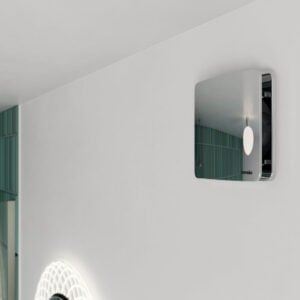
Why is it essential to ventilate your bathroom?
Bathrooms must have adequate mechanical or natural ventilation to control moisture and maintain indoor air quality.
Without sufficient extraction, warm, moist air condenses on cold surfaces such as tiles, ceilings, and windows. Over time, this can lead to:
- Surface mould growth (commonly black mould)
- Degradation of paint finishes and plaster
- Moisture absorption in timber structures
- Persistent condensation on windows and mirrors
Mechanical extraction (such as an extractor fan) is one of the most effective ways to meet these requirements in modern bathrooms, particularly in sealed or windowless spaces.
IP ratings
An IP rating shows how well an electrical product is protected against water and dust. In bathrooms, the correct IP rating is required for safety because different zones have different moisture exposure levels.
Learn more about bathroom zones and IP ratings here: https://www.showerstoyou.co.uk/latest/2024/11/bathroom-zones-and-ip-ratings-explained/
What are the different types of extractor fans available?
Before installation, it’s important to choose a fan suited to the bathroom layout, airflow requirements, and ducting route.
Wall-mounted models
Wall-mounted extractor fans extract air directly through an external wall. They are highly efficient and straightforward to install if your room has an outside-facing wall. For a sleek, modern finish, consider the Sensio Rubi 100mm White Wall Ventilation Fan. This model offers excellent extraction rates and a minimal design that blends into light-coloured walls.
Ceiling fans
If your room layout prevents wall mounting, Ceiling Extractor Fans provide a brilliant alternative. These units pull air upwards and push it out through the roof or eaves. Choose a ceiling fan if your bathroom is directly below an accessible loft. The Sensio Remy 100mm White Ceiling Ventilation Fan is a popular choice, delivering high extraction performance with low noise levels.
Inline extractor fans
These fans sit within the loft space above the room, connected via ducting. Because the motor is housed away from the room, they operate very quietly. We highly recommend browsing our range of Illuminated Inline Extractor Fans, which combine powerful ventilation with a stylish central light fitting.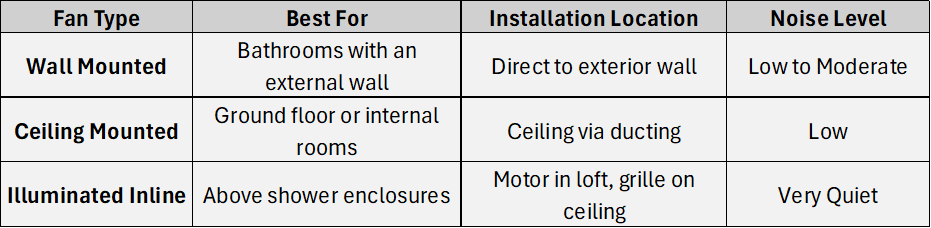
What tools and materials do you need to fit an extractor fan?
Gathering the right tools beforehand will save you time and frustration. You will need:
- A pencil and a tape measure
- A drill with masonry and wood bits
- A pad saw is used to cut the plasterboard.
- Flexible ducting and an external vent cover
- Screwdrivers and wall plugs
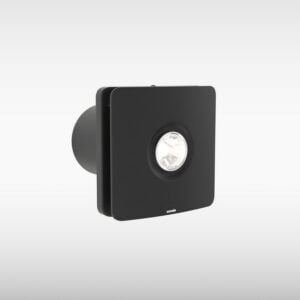
- Your chosen fan unit, such as the sophisticated Sensio Layci 100mm Black Wall Ventilation Fan, which adds a designer touch to dark or monochrome suites.
What is the step-by-step guide to fit an extractor fan?
Follow these distinct steps to fit an extractor fan securely.
Step 1: Plan the location
Identify a position near the shower or bath where moisture builds up the most. Avoid placing the unit directly above a heat source, such as a radiator. Check the wall or ceiling cavity for hidden pipes or existing cables.
Step 2: Cut the extraction hole
Hold the fan template against the surface and mark the outline with a pencil. Drill a pilot hole inside the circle. Use your pad saw to cut around the marked line carefully. Work slowly to ensure an, accurate circle.
Step 3: Install the ducting
Slide the flexible ducting through the prepared opening and route it to an external termination point (an external wall, a roof tile vent, or a soffit outlet).
All mechanical extraction systems should discharge directly to the outside air in accordance with Approved Document F. Discharging moist air into roof voids, loft spaces, or cavities is non-compliant and can lead to condensation, mould growth, and timber decay over time.
Keep duct runs as short and straight as possible. Avoid sharp bends or crushed sections, as these significantly reduce airflow performance. Where possible, use rigid ducting for improved efficiency and reduced noise.
Secure the external grille firmly and ensure it includes a backdraft shutter to prevent cold air ingress.
Step 4: Mount the fan unit
Place your chosen fan body into the cut hole. Mark the fixing points, remove the unit, and drill the necessary holes. Insert wall plugs, reposition the fan, and screw it firmly into place.
Step 5: Connect the electrics
All fixed wiring must be carried out, tested, and certified by a qualified electrician registered with a competent person scheme (such as NICEIC or NAPIT).
The electrician will:
- Connect the fan to a suitable switched or timed circuit.
- Ensure correct bathroom zoning compliance.
- Test earthing, insulation resistance, and circuit protection
- Issue a Building Regulations compliance certificate upon completion.
How can you troubleshoot common extractor fan problems?
Even premium products occasionally need attention.
- Fan not turning on: Check the isolator switch outside the room. If the switch is on, your electrician may need to inspect the wiring or the timer module.
- Excessive noise: Ensure the fan body is screwed tightly to the wall or ceiling. Loose fittings cause vibrating plastics.
- Poor extraction: Inspect the ducting for blockages or sharp bends. Straight, clear ducting allows the highest volume of air to escape.
How do you maintain your new ventilation system?
Regular maintenance ensures consistent airflow and prolongs the unit’s lifespan.
Recommended maintenance includes:
- Cleaning the external grille every 3–6 months
- Removing dust buildup from the fan cover and impeller
- Checking duct outlets for blockages or debris
- Ensuring backdraft shutters operate freely
Always isolate the electrical supply before carrying out any cleaning or maintenance.
For a low-maintenance, highly durable option, the Sensio Drax 100mm Chrome Wall Ventilation Fan features an easy-to-clean metallic finish and comes with a reliable manufacturer’s warranty.
Enjoying a fresher, healthier bathroom
Choosing to fit an extractor fan is a smart investment in your property. By removing excess moisture, you protect your decor from dampness and create a crisp, comfortable environment for your morning routine. With careful planning, the right tools, and the help of a certified electrician, the installation process is straightforward. Explore our extensive collection of fans online and take the first step towards a better-ventilated home today.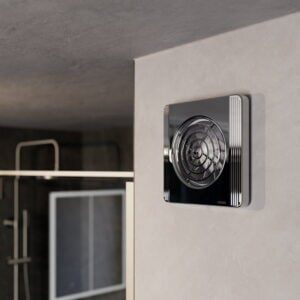
Frequently Asked Questions (FAQ)
How easy is it to install an extractor fan in a bathroom?
The physical installation to fit an extractor fan is relatively simple if you have basic DIY skills. Cutting the hole, running the ducting, and mounting the plastic housing takes a few hours. However, the electrical wiring must be completed by a qualified professional to ensure complete safety.
Do I need an electrician to install an extractor fan in my bathroom?
Yes. Under Part P of the UK Building Regulations, electrical work within specific bathroom zones requires a competent, registered electrician. They will safely wire the unit to the mains and issue the mandatory electrical compliance certificate.
Can you install a bathroom exhaust fan yourself?
You can complete the physical preparation yourself to save on labour costs. This includes cutting the necessary holes, fitting the external grille, and running the flexible ducting. You cannot legally complete the final mains wiring yourself unless you hold the correct electrical certifications.
Does a bathroom extractor fan need to go outside?
Yes. All extracted moisture must be expelled directly to the outside of the building. Venting damp air into a sealed loft or attic space will quickly cause condensation, mould growth, and severe structural damage to your roof timbers.
What size extractor fan do I need?
Bathroom fan size depends on room volume and usage. As a general guide:
- Small bathroom: ~80–100 m³/h
- Standard bathroom: ~100–150 m³/h
- Large bathroom or ensuite: 150 m³/h+
Higher humidity environments (showers, family bathrooms) benefit from higher extraction rates or humidity-controlled fans.