
 Low Online Discount Prices
 Fast Delivery
 Safe and Secure Online Checkout
We have all been there. You step into the shower enclosure expecting a refreshing wake-up, but instead, you are met with a weak dribble of water. Low bathroom water pressure is a common frustration for homeowners across the UK. It makes rinsing shampoo difficult, and waiting for a bath to fill can feel like a lifetime.
However, understanding the cause of the problem is the first step to fixing it. Whether you are planning a renovation or simply want a better daily shower experience, understanding how your water system works is essential. This guide from Showers to You explains what water pressure is, why it varies, and the specific steps you can take to improve it.
What is bathroom water pressure?
Simply put, water pressure is the measure of force that pushes water through your mains and into your pipework. It is measured in “bars,” with one bar being roughly equivalent to the force needed to push water up to a height of 10 metres.
It is important not to confuse pressure with water flow. Pressure is the force, while flow is the volume of water flowing through the pipe, measured in litres per minute. While they are different, a low flow rate is often a clear indicator of low pressure.
Factors affecting your water pressure
A combination of external factors and your internal plumbing system determines your pressure.
Location and Elevation
Your location relative to the nearest water reservoir plays a significant role. If your home is located in a valley, gravity facilitates water flow from the reservoir, which can likely result in high pressure. Conversely, a homeowner living at the top of a hill may struggle with weaker pressure because the water has to work against gravity to reach the property.
Time of Day
Mains pressure can fluctuate depending on demand. You may notice a drop in performance between 7:00 am and 9:00 am when households in your area are all showering and using taps simultaneously.
Your Boiler System
The type of boiler you have is the biggest internal factor:
- Combi Boilers: These are fed directly from the mains. They usually offer high pressure, but the flow rate decreases when multiple outlets are used simultaneously.
- Gravity-Fed Systems: Common in older UK homes, these feature a cold water tank in the loft and a hot water cylinder. These systems rely on gravity and often suffer from low pressure (typically around 0.2 bar).
- Unvented Systems: These have a hot water cylinder but are fed by the mains rather than a tank in the loft, usually providing strong pressure.
How to identify low bathroom water pressure
The signs are usually obvious. Your basin taps may take a long time to fill the basin, or your shower lacks power. However, to choose the right fixtures or pumps, you need an accurate measurement.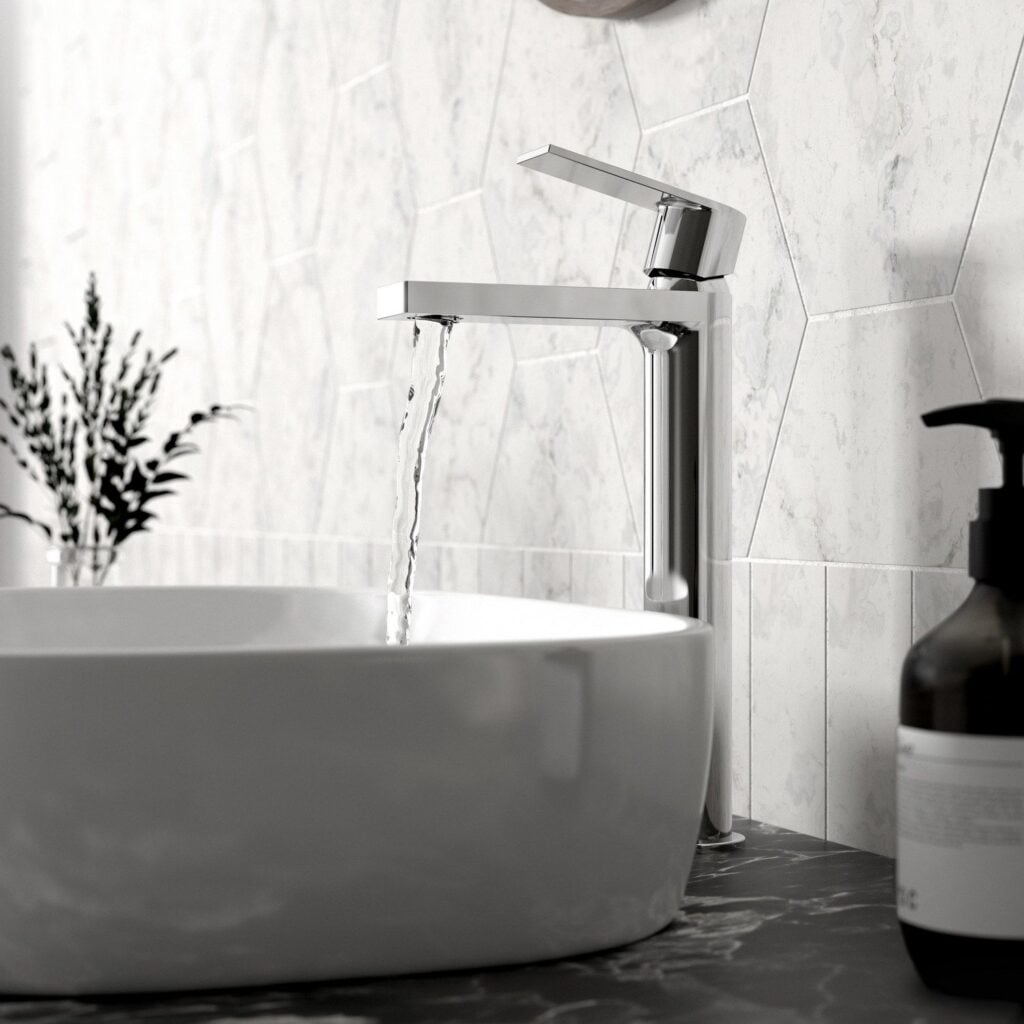
The Jug Test
You do not need professional equipment to get a rough idea of your flow rate. You can perform a simple test with a measuring jug and a stopwatch:
- Get a 1-litre or 2-litre jug.
- Place it under your bathroom tap or shower.
- Turn the water on full power.
- Time exactly 6 seconds.
- Turn the tap off.
The Calculation:
Take the amount of water in the jug (in litres) and multiply it by 10. This gives you the flow rate in litres per minute.
- Under 10 litres per minute: You likely have low pressure.
- 10–15 litres per minute: This is acceptable but could be improved.
- Over 15 litres per minute: This is considered good pressure.
Solutions for low bathroom water pressure
If your tests confirm low pressure, there are several effective ways to resolve the issue.
Install a Shower Pump
For homes with gravity-fed systems, installing a pump is the most effective solution. A pump boosts the flow of water to your mixer shower, transforming a weak dribble into a powerful spray.
There are various types available, including single- and twin-impeller options. You can browse our full range of Shower Pumps to find one that suits your specific system requirements.
Recommended Product: Aqualisa Mach 250
If you need a reliable boost, we recommend the Aqualisa Mach 250 Shower Pump. This 2.5-bar, twin-ended pump is designed to provide a serious upgrade to your water performance. It is durable, effective, and highly rated by customers.
One verified buyer recently stated: “This new pump has been improved and works even better than the last one. Brilliant.”
Check for Blockages
Sometimes, the issue is not with the system, but with the pipework. Old iron pipes can become corroded or clogged with limescale, which restricts the flow. If your pressure has dropped suddenly, it is worth checking that your stopcock is fully open. If the problem persists, you may need a plumber to inspect your pipes for restrictions.
Contact Your Supplier
Suppose you are on a mains-fed system and your pressure is consistently below the statutory minimum (usually 1 bar at the boundary of your property). In that case, you should contact your water supplier. They can test the pressure and investigate external faults.
Benefits of optimal water pressure
Sorting out your water pressure requires some effort, but the results are worth it.
- Better Showering: High pressure allows you to install rainfall showerheads or body jets that require a strong flow to operate correctly.
- Efficiency: Bathtubs fill significantly faster, saving you time in the evenings.
- Fixture Performance: Modern taps and mixer valves operate smoothly and mix hot and cold water more accurately when supplied with the correct pressure.
Frequently Asked Questions
How to increase water pressure in a bathroom tap?
If only one tap has low pressure, the aerator (the mesh at the end of the spout) might be blocked with limescale. Unscrew it and clean it out. VitrA Minimax S Bathroom Taps are designed with a coin-slot aerator for hassle-free maintenance. If all taps are low, and you have a gravity system, you may need to install a pump or raise the height of your cold water tank to increase the gravitational force.
Is 1.5 bar water pressure good for a shower?
Yes, 1.5 bar is generally considered good pressure for most domestic showers. It is sufficient to run most mixer showers and thermostatic valves effectively. Anything above 1.0 bar is usually classed as high pressure.
Can you increase the water pressure in the bathroom?
Yes. As mentioned, the primary method for gravity systems is installing a shower pump. For mains-fed systems, you cannot “pump” the mains directly, but you can upgrade to an unvented cylinder or ensure your internal pipework is wide enough (22mm rather than 15mm) to maximise flow.
Why is my water pressure low, but my toilet and shower are fine?
If the pressure is low in the shower only, while the toilet and basin are fine, the issue is likely isolated to the shower unit itself. The most common culprit is a blocked showerhead or hose. Limescale can clog the nozzles, restricting water flow.
For a comprehensive guide on fixing this issue, read our article on how to clean a showerhead.
Final thoughts
Dealing with low bathroom water pressure can be annoying, but it is rarely an unfixable issue. By identifying your system type and testing your flow rate, you can choose the right solution—whether that is a simple clean or investing in a quality shower pump.
Always check the minimum pressure requirements of any new taps or showers before you buy. Ensuring your system matches your fixtures guarantees a reliable and enjoyable experience for years to come.