
 Low Online Discount Prices
 Fast Delivery
 Safe and Secure Online Checkout
Shower Enclosures and Doors are more than just bathroom essentials; they play a major role in the functionality and style of your space. Whether you’re upgrading your ensuite or planning a complete bathroom renovation, understanding the options available can make all the difference.
With so many terms and designs thrown around, from frameless to reversible showers, it’s easy to feel overwhelmed. That’s why Showers to You has compiled answers to our top 10 most common questions about shower enclosures and doors to help you make confident, informed decisions.
1. What is an extension profile?
An extension profile is an additional piece installed to help extend the width of your shower door or enclosure. This is especially useful if your walls or alcoves aren’t perfectly straight (which is common!).
Extension profiles usually offer an extra 20mm to 30mm of adjustment on each side of the frame. By adding an extension profile, you can achieve the perfect fit without compromising the seal or functionality of your door.
When to consider an extension profile?
If your shower opening is slightly too large for the standard dimensions of your shower door, adding an extension profile ensures the door fits snugly and works efficiently. 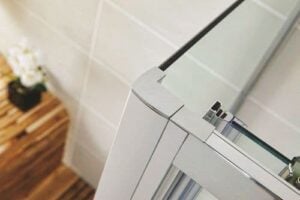
2. What is a reversible shower?
A reversible shower door means the design allows it to be installed to open either left or right, offering more flexibility depending on your bathroom layout.
Are all shower enclosures reversible?
No, not all. While many doors and enclosures state if they are reversible, some designs are built as left-handed or right-handed only. For example, the Merlyn Ionic Essence 1200 x 900mm One Door Offset Quadrant is a left-handed enclosure. When shopping, always check the product details or consult the retailer to confirm.
3. Can a shower be cut to size?
Shower doors and enclosures, especially those made with toughened and tempered glass, cannot be cut to size. Tempered glass is designed to be strong and shatter-resistant, but once it has been tempered, it cannot be altered or cut without breaking.
If a custom size is needed, the glass must be cut to the desired dimensions before the tempering process.
4. What is a shower side panel used for?
A shower side panel is a fixed piece of glass that attaches to the main shower door. It’s typically used for corner and quadrant enclosures to prevent water from escaping on the open side, such as the Roman Innov8 Matt Black 1500 x 900mm Inline Pivot Shower Door.
For example, when combined with bi-fold or sliding doors, the side panel is essential to containing splashes and providing the structure needed for the door to function properly.
5. What is a semi-frameless shower?
A semi-frameless shower enclosure features a mix of framed and frameless elements. The edges or outer frame provide stability, while the rest of the glass panels maintain a modern, minimalist look.
Semi-frameless showers are a great compromise between style and functionality, offering sleek aesthetics with enhanced structural durability.
6. What is a frameless shower?
Frameless showers rely solely on sturdy tempered glass and discreet hardware to hold the structure in place. These designs have no visible framing around the panels, creating a clean, contemporary look.
Frameless showers are immensely popular for their ability to create the illusion of more space, but they may require careful installation to ensure maximum stability.
If you would like a deeper comparison of frameless and framed options, check out our dedicated blog post on the Differences between Frames, Frameless and Semi Frameless Shower Enclosures.
7. What is a framed shower?
A framed shower enclosure has an outer frame that surrounds every edge of the glass. This design is generally more cost-effective and robust, making it a popular choice for families or heavy-use bathrooms.
Although not as sleek as frameless alternatives, framed enclosures often come in a variety of finishes, from Matt Black to Chrome, allowing you to customise the look to match your bathroom style.
8. What is tempered glass?
Tempered glass, also known as toughened glass, is a safety glass used for shower enclosures. It undergoes a special heat-treating process to increase its strength and ensure that if it does break, it shatters into small cube-like pieces rather than dangerous shards.
The thickness of tempered glass for shower enclosures typically ranges from 6mm to 10mm, depending on the enclosure design. People often choose thicker glass, like 8mm or 10mm, for frameless setups to ensure greater durability and stability.
9. What is a corner fitting and a recess/alcove shower door?
- Corner fitting refers to shower designs installed in the corner of your bathroom, such as quadrant enclosures or dedicated corner-entry shower enclosures. These are ideal for saving space in smaller bathrooms.
- Recess or alcove doors are designed to fit between two walls, creating an enclosed shower space without the need for additional side panels. These are a great choice for maximising the use of awkward or tight spaces.
10. What is an inline panel on a shower door?
An inline panel adds an extra glass panel next to the main shower door. It extends the width of the enclosure, offering greater coverage or flexibility for larger shower spaces.
For example, if you’re installing a hinged shower door but need extra length to prevent water from escaping an inline panel can bridge the gap between the door and the wall or adjacent panels.
Discover More Shower Enclosures and Doors
Shower enclosures and doors may seem straightforward, but as these common questions show, there’s a lot to consider when planning the perfect setup for your bathroom.
Understand technical features like reversible designs, tempered glass safety, and the differences between framed and frameless models to ensure you choose and install a design tailored to your needs.
For more advice or personalised recommendations, explore our range of shower doors and enclosures or reach out to our expert team. Contact one of our experts today via email (info@showerstoyou.co.uk), phone (01472 242159), or online contact form.