
 Low Online Discount Prices
 Fast Delivery
 Safe and Secure Online Checkout
Planning a new bathroom is an exciting project. Browsing glossy brochures of rainfall showers and freestanding baths lets you imagine the finished look. However, before you buy a single tile or tap, there is a crucial first step: accurate measurement. Whether you are planning a complete overhaul or replacing a few key fixtures, knowing how to measure your bathroom correctly ensures that everything fits perfectly and functions as intended.
Getting the dimensions right is the foundation of any successful renovation. A difference of just a few millimetres can be the distinction between a straightforward installation and a costly headache.
This guide from Showers to You provides a step-by-step approach to measuring your bathroom, helping you avoid common pitfalls and shop with confidence.
Preparing to Measure Your Bathroom
Before you start, gather the right tools. You do not need expensive laser equipment; a simple setup works best for most homeowners.
What you will need:
- A metal tape measure (fabric ones can stretch and cause inaccuracies)
- Graph paper or plain paper
- A pencil and a rubber
- A ruler
Start by drawing a rough outline of the bathroom’s shape on your paper. Do not worry about scale at this stage; just capture the general layout, including any alcoves, chimney breasts, or recesses. Mark the location of the door and windows on your sketch. This visual map will serve as the place to record your figures as you measure your bathroom walls and floor space.
Measuring Key Dimensions
Now it is time to capture the numbers. Use metric measurements (millimetres), as this is the standard used by bathroom manufacturers and fitters in the UK.
1. Wall-to-Wall Measurements
Measure the length of each wall. Run your tape measure from one corner to the other. If you are renovating an existing bathroom, try measuring at floor level and mid-height to check whether the walls are true (straight). If the walls are tiled, remember that the actual brick wall is further back; note this on your plan.
2. Ceiling Height
Measure the distance from the floor to the ceiling. This is vital if you plan to install a tall shower enclosure or storage unit. If you have a sloping ceiling, note the height at the lowest and highest points.
3. Doors and Windows
Measure the height and width of your door and windows (including the frame). Crucially, note the distance from the corner of the room to the edge of the door or window frame. Mark the direction the door opens on your sketch. An inward-opening door significantly impacts where you can position a basin or toilet.
Fixture Measurements: Finding the Right Fit
Once you have the room dimensions, determine which fixture sizes will fit. This often involves balancing your desire for luxury items with the available floor space.
Baths
The standard UK bath size is 1700mm x 700mm. If you have this space available, you have a vast range of options.
For a durable, high-quality option, consider the Beauforté Reinforced Malin 1800 x 700mm Single-Ended Bath. It features ultra-strong reinforcement for heat retention and rigidity.
“Hassle free purchase, good website, good range of products, bit expensive but you get what you pay for, beautiful bath, really good communication on the delivery….. Impressive” – Martin R.
If you prefer a central tap layout, the Beaufort Malin 1650 x 700mm Double Ended Bath is a fantastic choice for slightly shorter bathrooms.
“This is a good quality bath. It has taken my bathroom to a whole new level in design. The buying process was easy. The delivery company arranged a date and delivered on time. Very pleased” – Janet W.
If you are unsure which style suits your layout, read our guide, Bath Sizes: How to Pick the Right One, for detailed advice.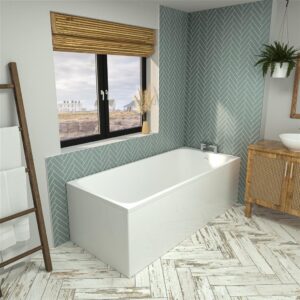
Shower Enclosures
Measuring for a shower enclosure requires precision. You must account for the tray size and the glass height.
For recesses, a sliding door is space-efficient. The Ajax Reni 8mm Chrome 1500mm Sliding Shower Door is a modern solution with toughened safety glass.
“Great shower door. Components seem good quality, especially the rollers on the sliding door” – Kevin R.
For corner installations, a quadrant enclosure saves floor space. The Merlyn Ionic Essence Framed 800mm 2 Door Quadrant Shower Enclosure is a popular choice for its robust build.
“Very sturdy and has a sleek but solid appearance” – Vivienne H.
When planning this area, ensure you verify your dimensions against our article, “What size shower enclosure do I need?” Additionally, if you are retaining an existing tray, you must check the radius to ensure it is a quadrant shape. Our guide on How to Measure a Shower Tray explains exactly how to do this.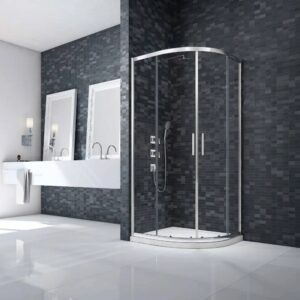
Toilets
Toilet dimensions include projection (depth), width, and height. In smaller bathrooms, a short projection toilet can save valuable floor space. ‘Comfort height’ toilets are slightly taller, making them easier to use.
The Tavistock Micra Evo Comfort Height Back to Wall Rimless WC combines hygiene benefits with an accessible design.
“Arrived on time and in good condition. It was a replacement and as it is a different size a bit of fiddling was required. It works very well and the rimless action is very good.“
Failing to account for the toilet’s projection is a common error. To ensure you don’t overlook details like this, review our article on Bathroom Design Mistakes and How to Avoid Them.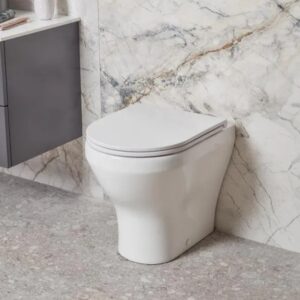
Additional Considerations
Beyond the walls and floor, you must locate your services.
- Soil Pipe: Mark exactly where the large waste pipe leaves the room. Moving this is often difficult and expensive, so sticking to the existing layout for your toilet is usually the most budget-friendly option.
- Water Supply: Note where the hot and cold pipes enter the room.
- Budget and Timeline: Accurate measurements help you order the correct materials, reducing waste and keeping your budget on track.
Seeking Professional Help
If your bathroom has complex angles, uneven walls, or you are not confident in your ability to measure it accurately, it is wise to consult a professional. Many fitters prefer to conduct their own survey before starting work.
Furthermore, using a 3D design service can help visualise how different layouts will fit within your measured space, ensuring you maximise every inch of the room.
Frequently Asked Questions
How do you measure the size of a bathroom?
To calculate the overall size, measure the length and width of the floor space. Multiply these two figures to get the area in square metres (or square feet). This figure is essential for purchasing floor tiles. For wall tiles, measure the width of each wall and multiply by the floor-to-ceiling height.
How to measure a bathroom for a renovation?
When you measure your bathroom for a renovation, draw a detailed floor plan. Include fixed features like windows, doors, and the soil pipe location. If you are measuring whilst the old suite is still in place, try to measure behind basins or toilets where possible to get the true wall-to-wall distance.
Can you measure a curve?
Yes. If you have a quadrant shower tray, you measure the radius. Measure one straight side (length), then measure from one straight edge to the point where the curve starts. Most standard quadrant shower trays have a radius of 550mm.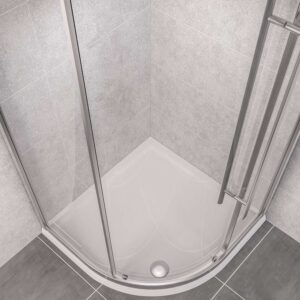
Conclusion
Taking the time to measure your bathroom correctly is the most valuable investment you can make in your renovation project. It prevents the frustration of ordering items that don’t fit and ensures a smooth installation.
By following these steps—sketching your layout, recording precise wall and ceiling dimensions, and carefully checking fixture sizes—you set the stage for a stunning new bathroom. Whether you choose a spacious Beaufort Bath or a sleek Ajax Shower Door, accurate numbers give you the freedom to design with confidence.